


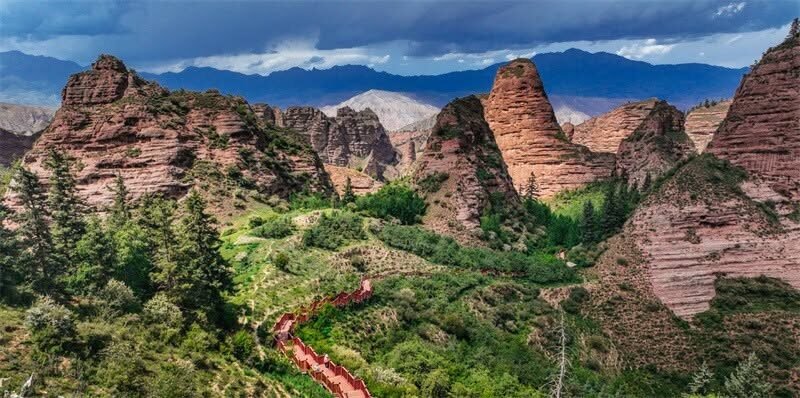
Mountain regions across China are attracting crowds of travelers as vivid autumn foliage and seasonal morning landscapes transform the countryside. Tourists are traveling to scenic locations in northwestern and southwestern provinces to enjoy nature following the end of the busy National Day holiday period.
In Qinghai Province, located in northwestern China, the Khanbula UNESCO Global Geopark has become a key destination for autumn visitors. The park features dense forests showing shades of red, orange, and gold alongside the emerald waters of the Yellow River. The vibrant trees contrast with millions of years old red Danxia rock formations, creating a unique visual landscape for travelers.
Visiting after the peak holiday period allows tourists to explore the geopark with fewer crowds and at lower costs. Traveler Wang Zhi noted that taking a trip after the holiday rush significantly lowered expenditures on airfare and hotel accommodations while providing a more peaceful experience. Another visitor, Zhang Yuhan, said the quieter atmosphere made it easier to study the geological history of the park and engage with local guides, which was difficult during busier times.
To support the post-holiday influx of travelers, authorities at Khanbula have introduced several interactive activities. Visitors can participate in workshops focused on leaf-based handicrafts, join guided tours of the Danxia landforms, and watch special cultural performances designed to enrich their visit.
Farther south, in Lijiang in Yunnan Province, the annual “Golden Sunrise” season has officially begun at Yulong Snow Mountain. From October through February, clear morning skies allow the first rays of sunlight to illuminate the snow-covered peaks, casting a bright golden glow over the summits. Thousands of spectators gather early each morning to view the phenomenon. Tourist Li Sisi described witnessing the initial light hit the snow as a majestic and deeply calming experience.