


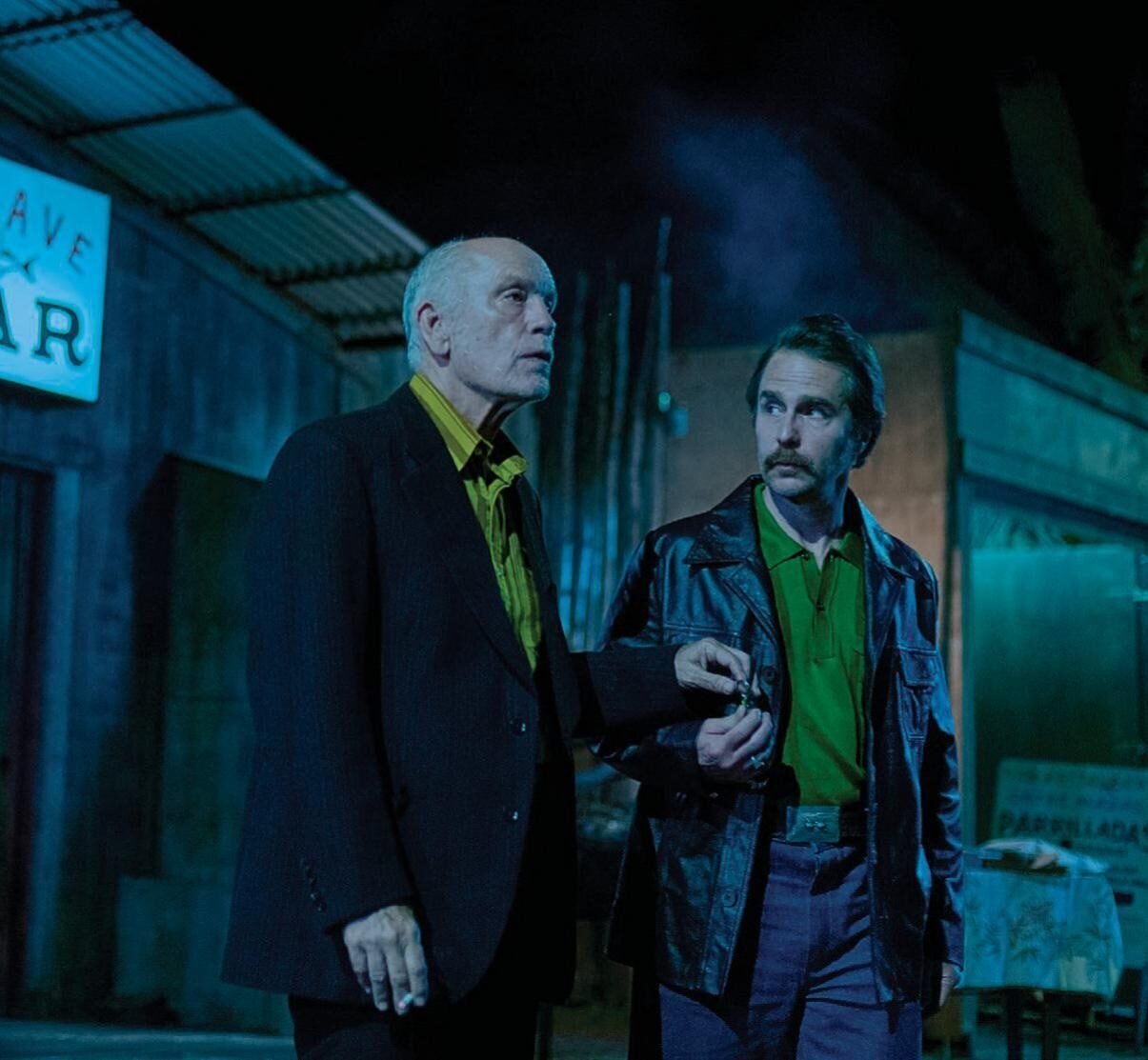
Filmmaker Martin McDonagh’s latest feature, “Wild Horse Nine,” brings actors John Malkovich and Sam Rockwell together as two 1970s CIA operatives navigating friendship, political unrest, and human conflict. The story follows the duo as they carry out foreign intelligence assignments while dealing with their own turbulent personal relationship.
Set in 1973 during the presidency of Chilean socialist leader Salvador Allende, the narrative unfolds shortly before a military coup overthrows the government. Operatives Chris, played by Malkovich, and Lee, portrayed by Rockwell, are initially stationed in Santiago before receiving a special mission that takes them to Easter Island.
The film explores the long-standing dynamic between the two agents, who frequently clash over Chris’s eccentric behavior. Chris suffers from terminal cancer and uses heroin to alleviate his physical pain, yet he spends time worrying about preserving household moths and drafting memoirs that question whether dinosaurs possessed souls. Lee acts as a calm, pragmatic sounding board who tolerates his partner’s quirks while maintaining a deep bond with him.
Steve Buscemi plays MJ, the operatives’ ruthless and ambitious superior officer, whom Chris openly detests and spreads rumors about. Despite admitting to involvement in secret operations that resulted in nearly 68 deaths, Chris demonstrates unexpected sensitivity toward local wildlife, forming a brief spiritual connection with an Easter Island wild horse before its sudden, unexplained death.
The plot features satire directed at foreign espionage, suggestive exchanges with a pair of young tourists, and reflections on global cultures against the backdrop of Easter Island’s iconic stone monuments. Similar to McDonagh’s previous projects such as “In Bruges” and “The Banshees of Inisherin,” the narrative focuses heavily on the frictions and bonds of male interpersonal relationships.
Although some dramatic exchanges and verbose dialogue occasionally slow the narrative flow, strong performances by Malkovich and Rockwell drive the movie. The film displays a warmer human element than McDonagh’s earlier effort, “Three Billboards Outside Ebbing, Missouri,” leaning on the screen presence of its lead actors to balance its theatrical elements.