


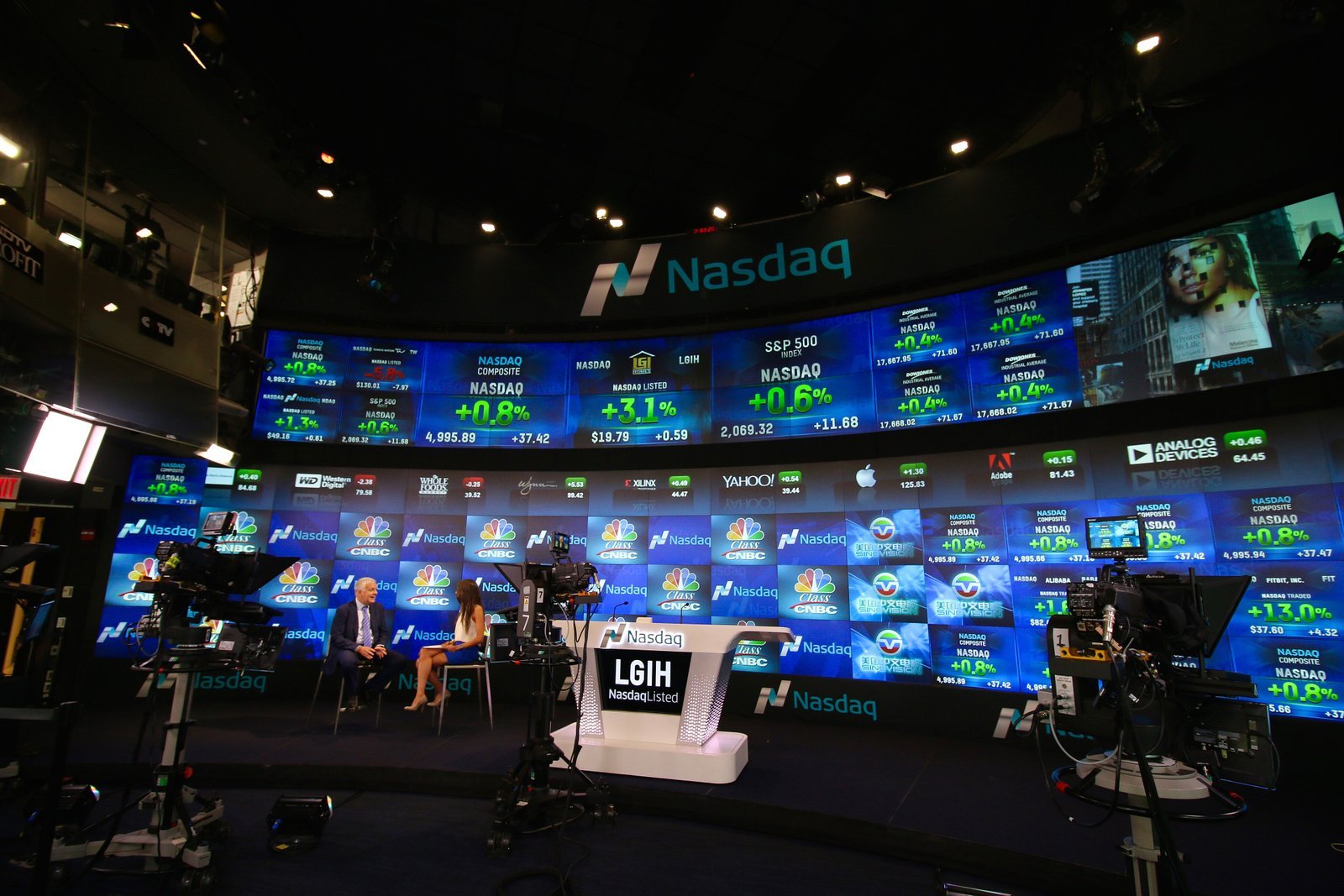
The Dow Jones Industrial Average reached a historic milestone on Tuesday by closing above the 50,000 level for the first time in its history. The landmark close came even as a sharp selloff in semiconductor and artificial intelligence equities dragged down technology-heavy indexes.
By the end of Tuesday’s trading session, the Dow had gained slightly under one percent to finish near 50,019. Meanwhile, the benchmark S&P 500 index declined by roughly half a percent to finish near 7,200.
The technology-focused Nasdaq Composite experienced the steepest drop among the major benchmarks, sliding between 1.5 and 1.7 percent depending on data providers. Market analysts noted that the divergent performances pointed to a broader rotation of investor capital out of tech stocks and into industrial and non-tech sectors.
Traders actively took profits in chipmakers and AI-related firms following substantial market gains earlier in the week. Those earlier advances had been largely spurred by chip design leader Nvidia, though Tuesday’s pullback erased a portion of those quick profits.
Market sentiment around tech companies was further tempered by persistent anxieties regarding massive corporate expenditures on artificial intelligence infrastructure. Additionally, uncertainty surrounding the future trajectory of interest rates added downward pressure on high-growth technology shares.
The session marked a noticeable shift from earlier market trends, where widespread AI concerns had pulled the Nasdaq lower and driven broader market indexes toward correction levels. Tuesday’s trading dynamics suggested that market participants were reallocating their investments across diverse sectors rather than exiting equity markets completely.
Financial market attention now turns toward a dense slate of economic reports scheduled for release in the United States on Wednesday ahead of the holiday period. Financial markets in the US will remain closed on Thursday for Thanksgiving and will observe an abbreviated trading session on Friday.
The reduced trading schedule late in the week is anticipated to thin overall market volume, which can lead to heightened price volatility and sharper market movements. While reaching 50,000 offers a significant psychological win for the Dow, overall market direction after the holiday will hinge significantly on how technology and semiconductor stocks recover.