


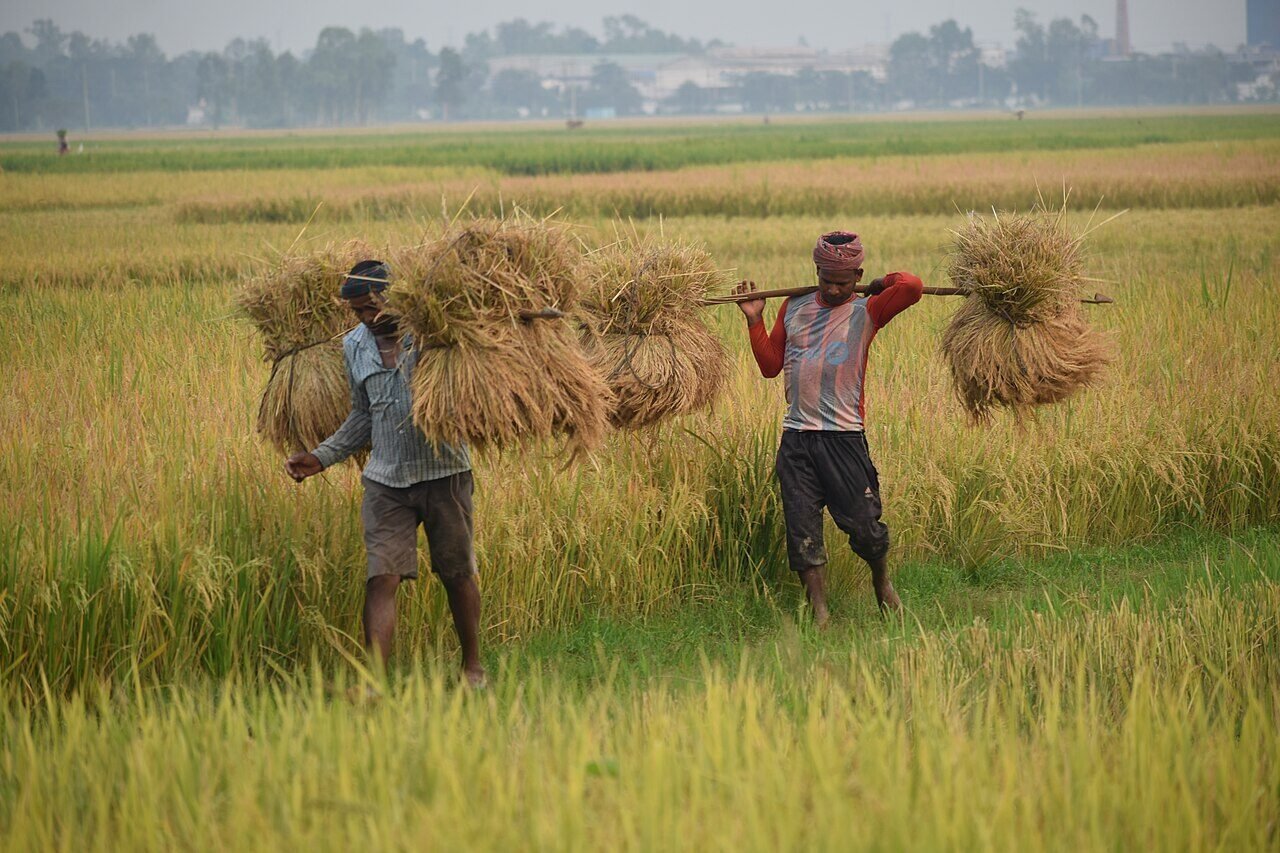
Farmers in Pirojpur district, particularly in the low-lying areas of Nazirpur upazila, are planning to shrink their Boro rice cultivation this season. The decision comes after last year’s low market returns left growers facing severe financial losses, compounded by fears of escalating production expenses this year.
Boro rice serves as the primary annual crop in Nazirpur and other wetland zones of Pirojpur, forming the largest share of the district’s overall rice output. Seedbed preparations have already commenced, with transplanting scheduled to start in December.
Despite its agricultural importance, growers report that selling prices fail to cover their investments. Abinash Mondal, a grower from South Jhajhania village in Nazirpur, spent roughly Tk 36,000 on one bigha (52 decimals) of land last season, yielding 40 maunds of grain. “Selling the paddy did not even cover production costs,” Mondal said, adding that he could not afford to repeat the risk.
Other local agriculturalists are similarly scaling down their operations. Pradip Mondal, also from South Jhajhania, intends to farm five bighas of Boro rice this season down from eight bighas last year. Likewise, farmer Abdus Salam plans a reduction of one and a half bighas after managing four and a half bighas last season.
Farmers explained that paddy prices once exceeded Tk 1,100 per maund, but last season they received at most Tk 850 per 40 kg maund, with Salam reporting sales around Tk 800. To turn a profit under current conditions, growers estimate they need between Tk 1,200 and Tk 1,300 per maund.
Cultivation expenses are projected to climb further due to the rising costs of pesticides and fuel oil, along with uncertainties surrounding fertilizer availability. Additionally, daily wages for harvesting laborers have reached approximately Tk 1,200, while farmers express frustration over wholesale buyers avoiding paddy purchases despite high retail rice prices.
Nazirpur Upazila Agriculture Officer Isratunnesa Isha acknowledged that last season’s poor prices could discourage planting this year. She noted that while the agriculture office provides technical support, regulating market prices lies beyond its scope.
Data from the Department of Agricultural Extension shows Nazirpur targeted 12,500 hectares for Boro this year, down slightly from 12,600 hectares last season. Across Pirojpur district, the official target is 34,020 hectares compared to 34,005 hectares cultivated last year, though field reports suggest actual cultivation may fall short of official expectations.