


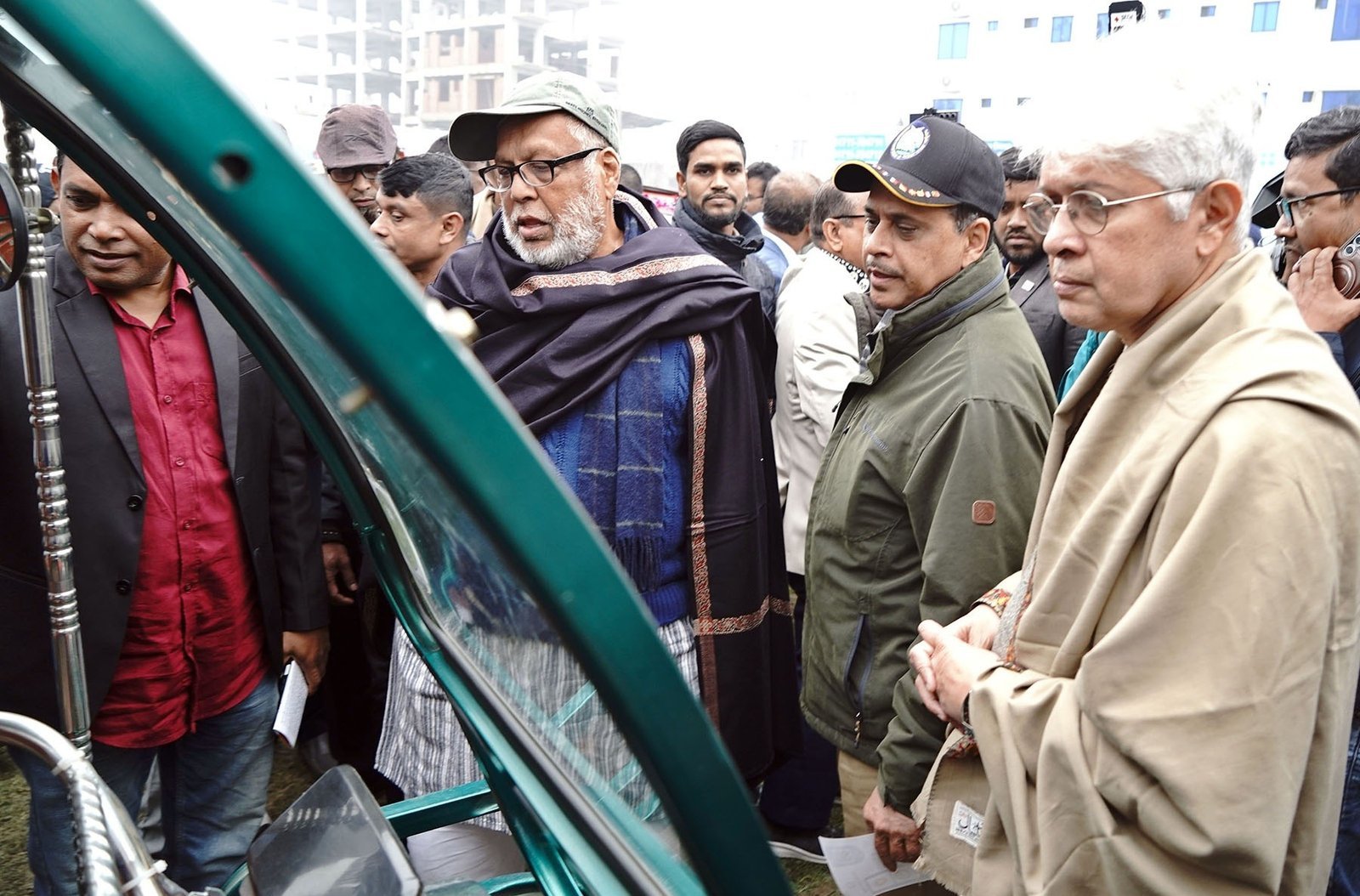
Authorities in Bangladesh are rolling out a formal registration system for battery-powered e-rickshaws starting Monday across 13 city corporation areas. The initiative aims to bring order and set official rules for these ubiquitous street vehicles. Mir Shahe Alam, state minister for local government, rural development and cooperatives, announced the regulations during a press briefing at the Secretariat on Sunday. He reassured owners and drivers that existing battery rickshaws will not be abruptly removed from roads as the process begins, advising them against panicking.
Under the new framework, registration fees are divided based on vehicle passenger capacity. Two-seat e-rickshaws require a one-time payment of Tk 8,000 alongside an annual renewal fee of Tk 4,000. Meanwhile, four-seat models carry a registration cost of Tk 10,000 and a yearly renewal charge of Tk 5,000. Individuals are permitted to register up to five vehicles using a single national identity card, which can be done within a single city corporation or distributed across multiple jurisdictions.
Strict technical and operational guidelines accompany the rollout. Every approved transport must feature a functional speedometer and maintain a maximum speed limit of 25 kilometers per hour. Unregistered e-rickshaws will be barred from operating on municipal roadways entirely. Furthermore, vehicle charging is restricted to authorized stations, with severe legal consequences awaiting anyone caught utilizing illegal or stolen power connections. Battery recycling or disposal also requires explicit clearance from the Department of Environment.
Future plans include designating specific operating zones, travel routes, and distinct color codes for the vehicles to improve traffic visibility. Through regulated registration, capped speeds, and controlled charging stations, the administration intends to reduce urban congestion. The phased implementation represents a major step toward organizing city streets currently crowded with battery-driven transport.