


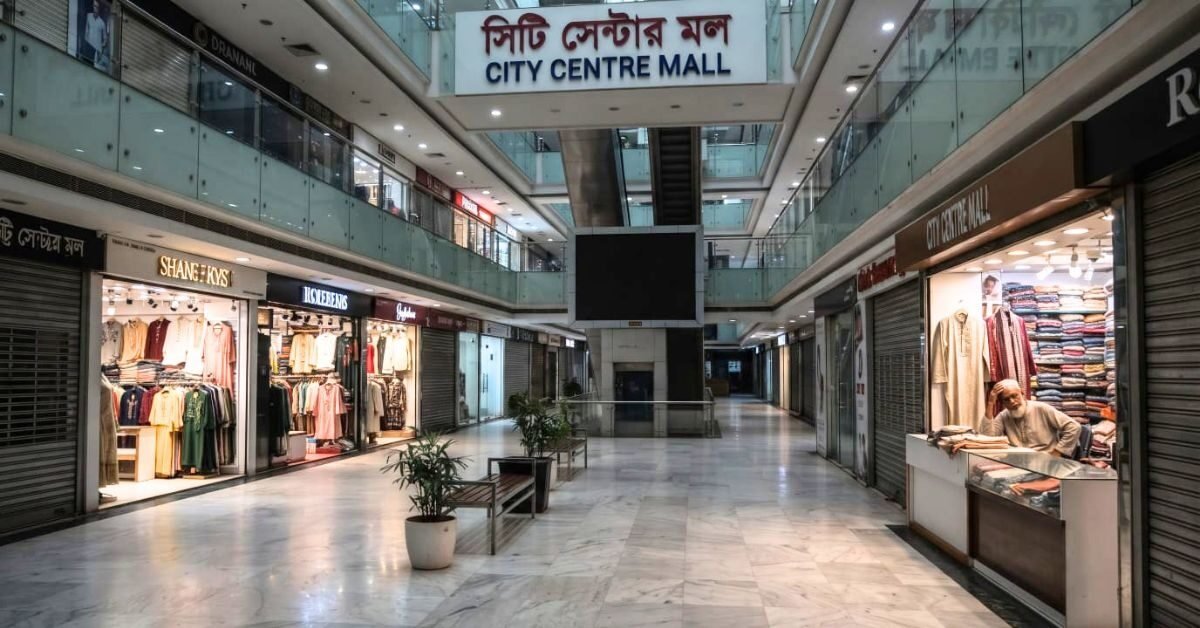
The shuttering of Karnaphuli Garden City Shopping Complex on October 1, 2026, has highlighted growing financial strain across Dhaka’s retail sector. First opened in 1998 with 198 shops, the Kakrail-Shantinagar landmark was down to just 25 active businesses before closing its doors, with owners now evaluating options to sell or repurpose the property.
Traders warn that at least 10 other aging shopping centers in the capital face similar risks as footfall drops drastically. Many store owners report going three to five consecutive days without a single sale, leaving them unable to cover utility bills, rent, and staff salaries without drawing from their remaining capital.
The retail downturn is closely tied to persistent inflationary pressures and a sharp decline in disposable income. Figures from the Bangladesh Bureau of Statistics show general inflation reached 8.34 percent in September 2026, forcing households to prioritize essential expenses like food, utility bills, and healthcare over non-essential purchases such as clothes and home décor.
Financial insecurity among middle-income households has further eroded consumer demand. A 2025 study by the Power and Participation Research Centre revealed that an average middle-class family earns Tk 32,685 per month but spends Tk 32,615, leaving a monthly surplus of only Tk 70 and leaving roughly 31 million people vulnerable to economic shocks.
Economic growth has also slowed, with the World Bank forecasting GDP expansion of 3.4 percent for both the 2025–26 and 2026–27 fiscal years. Earlier International Monetary Fund data documented a steady decline in growth from 5.8 percent in fiscal year 2022–23 down to 3.7 percent in 2024–25, driven by subdued investment and high inflation.
Employment disruptions following the fall of the Sheikh Hasina administration on August 5, 2024, have added to consumer retrenchment. Industry data indicates hundreds of factory closures occurred in major industrial belts over the past two years due to energy shortages, labor unrest, and weaker export orders, leading to tens of thousands of job losses.
Compounding the crisis for physical stores is the rapid rise of e-commerce. A Bangladesh Bureau of Statistics survey for 2024–25 found that 21.3 percent of residents in Dhaka Division purchased goods or services online, as digital platforms increasingly draw shoppers away from traditional commercial centers.