
Close Menu
Future BanglaFuture Bangla
    What's Hot

    Dhaka police bolster metro security with building inspections and signed property undertakings

    November 29, 2026

    US stocks rebound in shortened post-holiday trading session led by chipmakers

    November 28, 2026

    Australia passes landmark digital safety law shifting online harm liability to platforms

    November 28, 2026
    Trending
    • Dhaka police bolster metro security with building inspections and signed property undertakings
    • US stocks rebound in shortened post-holiday trading session led by chipmakers
    • Australia passes landmark digital safety law shifting online harm liability to platforms
    • Iran confirms Qatar and Pakistan relaying US proposals amid Strait of Hormuz dispute
    • Jubo league and chhatra league leaders threaten lakshmipur police station with arson
    • Bangladesh risks $25.8 billion annual LNG import cost under master plan
    • US federal jury convicts Chinese telecom giant Huawei on ten criminal counts
    • Bereaved mother in custody sees deceased disabled son at Kashimpur jail gate
    Sunday, November 29
    Future BanglaFuture Bangla
    • Bangladesh
    • World
    • Economy
    • Tech & Media
    • Politics
    • Society
    Future BanglaFuture Bangla
    Home»Bangladesh»Bangladesh hilsa catch drops 12 percent over two years as salinity rises
    Bangladesh

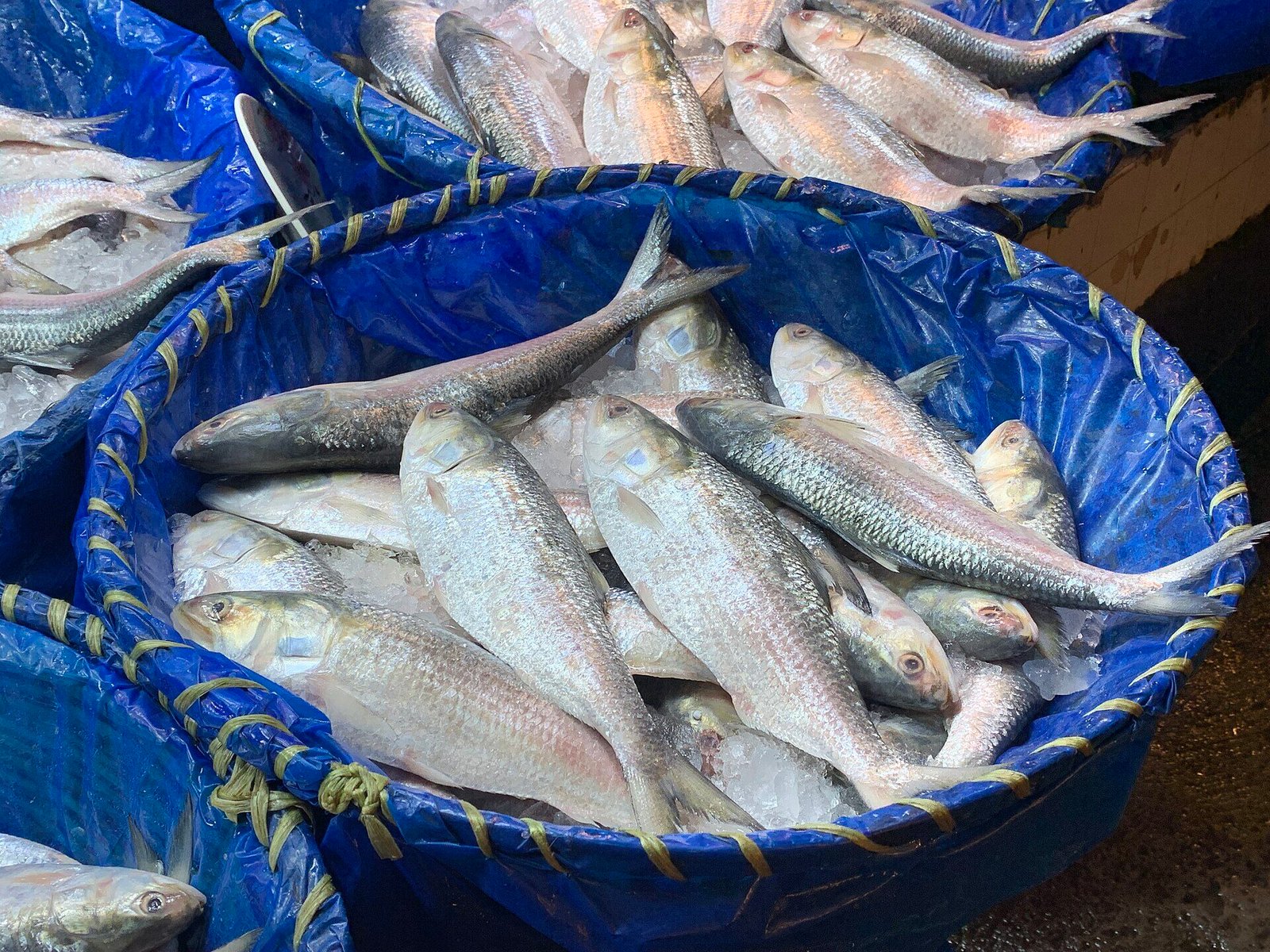
    Bangladesh hilsa catch drops 12 percent over two years as salinity rises

    Future Bangla DeskBy Future Bangla DeskNovember 28, 20262 Mins Read
    Bangladesh hilsa catch drops 12 percent over two years as salinity rises

    Bangladesh’s annual hilsa production fell by more than 12 percent across two consecutive fiscal years, driven by a sharp drop in marine catches and environmental degradation along key river migration routes. Official figures show a steady decline in total harvests despite an increasing number of fishing vessels operating in coastal waters.

    Data from the Department of Fisheries reveals that total yield dropped from a record 571,342 tonnes in the 2022-23 fiscal year to 500,288 tonnes in the 2024-25 fiscal year. This represents a decrease of 71,054 tonnes, or roughly 12.4 percent, over the two-year period, following an intermediate output of 529,487 tonnes recorded in fiscal year 2023-24.

    The contraction was most severe in sea catches, which plummeted by 22 percent over three years. Maritime hilsa harvests fell from approximately 322,000 tonnes in fiscal year 2021-22 to around 251,000 tonnes in 2024-25, taking nearly 71,000 tonnes of fish out of the ocean supply.

    Acknowledging the lower figures, the Minister of Fisheries and Livestock stated that the government is aware of the nationwide reduction in hilsa yields. Coastal fishing communities report growing financial hardship as a result of the shrinking catch.

    In Mohipur under Patuakhali district, the fleet of seafaring fishing boats expanded from about 800 vessels seven to eight years ago to nearly 1,500 today. Despite this significant rise in fishing effort, total output has failed to grow, leaving many fishermen struggling to cover basic operational expenses for each sea trip.

    Scientific experts point to severe ecological challenges in river channels. Hilsa researcher and former Fisheries Research Institute director Anisur Rahman noted that the availability of large-sized fish has diminished, while reduced water depth along routes connecting the sea to main rivers is obstructing migration.

    Recent surveys show that dry-season salinity in the Meghna estuary has reached nearly 10 parts per thousand, almost double the concentration recorded ten years ago. Declining freshwater inflow from upriver increases salt levels, adversely impacting hilsa breeding and natural movement patterns.

    Hilsa accounts for roughly 12 percent of Bangladesh’s total fish production and serves as a major source of income for coastal and riverbank populations. Although some estimates for the 2024-25 fiscal year vary slightly—citing figures such as 512,000 or 504,000 tonnes—the overall data reflects a clear downward trend.

    Previous ArticlePolice FC and Kings win as Mohammedan and Abahani stumble in league return
    Next Article Bangladeshi engineers win global UN hackathon with local AI trade law platform

    Related Posts

    Dhaka police bolster metro security with building inspections and signed property undertakings

    November 29, 2026

    Jubo league and chhatra league leaders threaten lakshmipur police station with arson

    November 28, 2026

    Police FC and Kings win as Mohammedan and Abahani stumble in league return

    November 28, 2026
    Top Posts

    Rocky marks 50 years as a narrative of dignity and working-class struggle

    November 15, 2026

    Bangladesh seeks Estonian expertise to develop lifelong digital identity system

    November 22, 2026

    Zipline secures $1.5 billion funding as valuation climbs to $21.5 billion

    November 6, 2026
    About
    About

    Future Bangla is an independent digital news platform delivering timely, accurate news from Bangladesh and around the world. We cover politics, economy, technology, society, and in-depth explainers.

    Most Popular

    Popular mobile battle royale game Free Fire relaunches in India after ban

    November 2, 2026

    Mobile operators demand lower spectrum prices ahead of licence expiry

    November 2, 2026

    Bangladesh keeps fuel prices unchanged for November following September hike

    November 2, 2026
    Our Picks

    Dhaka police bolster metro security with building inspections and signed property undertakings

    November 29, 2026

    US stocks rebound in shortened post-holiday trading session led by chipmakers

    November 28, 2026

    Australia passes landmark digital safety law shifting online harm liability to platforms

    November 28, 2026
    © 2026 Future Bangla. All Rights Reserved.
    • About us
    • Contact us
    • Privacy Policy
    • Terms and Conditions
    • Disclaimer

    Type above and press Enter to search. Press Esc to cancel.