


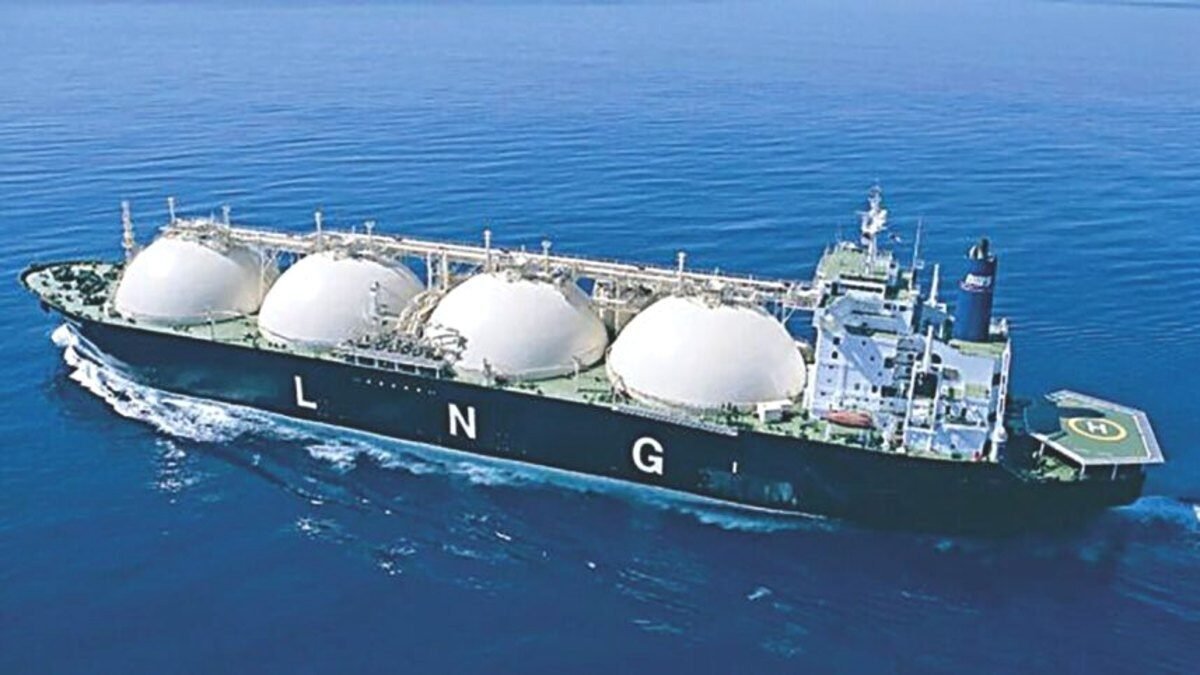
Bangladesh could face annual liquefied natural gas import bills of up to $25.8 billion by 2040 if it proceeds with proposed gas infrastructure under the Moheshkhali-Matarbari Integrated Infrastructure Development Initiative, according to a report by energy research group Market Forces. The report warns that building planned gas power facilities and import terminals will require roughly $20 billion in initial capital, placing heavy strain on the country’s foreign exchange reserves and debt sustainability.
Jointly launched on Saturday in Cox’s Bazar alongside Dharitri Rakshay Amra and Waterkeepers Bangladesh, the report titled “LNG’s Last Ditch: Bangladesh’s MIDI Master Plan” outlines the fiscal and energy security risks of the expansion. Under the MIDI framework, Bangladesh aims to construct up to 13,000 megawatts of gas-fired electricity capacity in the Chattogram region at an estimated cost of $19 billion. An additional $1 billion would be required to build a land-based regasification terminal capable of processing 1,000 million cubic feet of gas per day.
To supply these planned facilities, the country may need to import around 25 million tonnes of LNG annually by 2040. Depending on international market conditions, yearly import expenses could range from $10.3 billion under a low-price scenario to $15.8 billion in a moderate market, reaching $25.8 billion if global prices remain high.
With domestic natural gas production declining, researchers noted that heavy reliance on imported gas exposes Bangladesh to severe supply risks and price volatility. Power generation across the country was previously disrupted when global LNG prices surged in the wake of the Russia-Ukraine war.
The study also highlighted the significant involvement of Japanese state agencies and corporations in advancing the MIDI initiative. Key entities linked to the project include the Japan International Cooperation Agency, the Japan Bank for International Cooperation, and commercial firms such as JERA, Sumitomo, and Itochu.
Beyond financial concerns, the report detailed ecological and social disruptions in coastal communities. It stated that the existing Matarbari-1 coal power plant damaged the livelihoods of at least 20,000 salt farmers, fishermen, and local producers, while proposed fossil fuel projects could generate more than one billion tonnes of carbon dioxide equivalent over their operational lifetimes.
Market Forces recommended shifting investments toward renewable energy, noting that Bangladesh has technical potential for 240 gigawatts of solar power and 30 gigawatts of onshore wind energy. The group urged the government to expand industrial rooftop solar, battery energy storage systems, and power grid upgrades to reduce import dependence.
The keynote presentation was delivered by Munira Chowdhury, Asia energy transition director at Market Forces, at an event chaired by DHORA Convener Fazlul Kader Chowdhury. Other participants included Waterkeepers Bangladesh Coordinator Sharif Jamil, Yuki Tanabe of the Japan Center for a Sustainable Environment and Society, representatives from Japanese energy companies, and local residents.